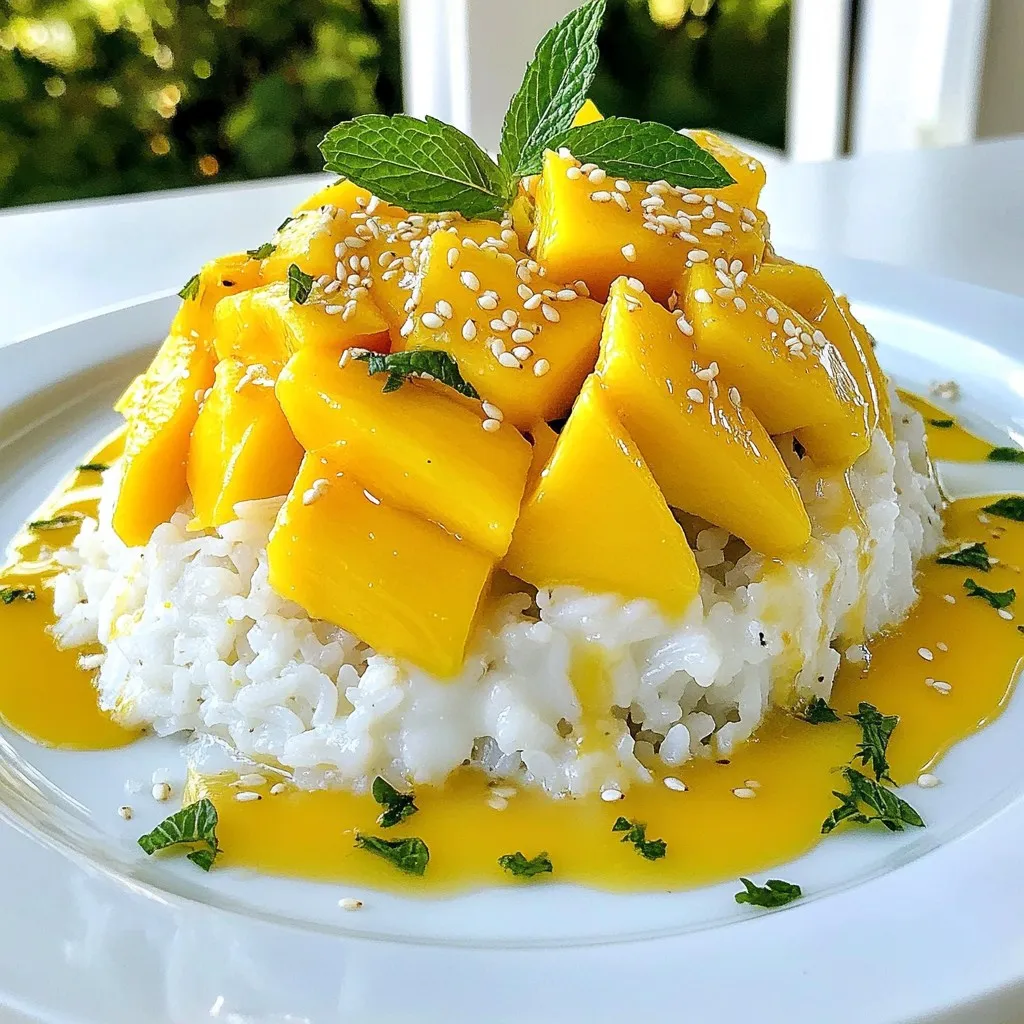
Do you crave a sweet, creamy treat? Thai Mango Sticky Rice is a must-try! This simple dish combines soft, glutinous rice with rich coconut milk and fresh mango. In just a few steps, you can make this delicious dessert at home. Join me as I share an easy recipe, useful tips, and fun variations. Let’s dive into the world of Thai Mango Sticky Rice and satisfy your taste buds!
Why I Love This Recipe
- Exotic Flavors: This dish combines the sweet and creamy taste of coconut milk with ripe mango, creating a delightful tropical experience in every bite.
- Texture Harmony: The sticky rice provides a unique chewy texture that complements the softness of the mango slices, making it a satisfying dessert.
- Simple Preparation: With just a few ingredients and straightforward steps, this recipe is easy to follow, even for novice cooks.
- Visual Appeal: The vibrant colors of the mango and garnishes make this dish not only delicious but also a stunning centerpiece for any occasion.
Ingredients
Key Ingredients for Thai Mango Sticky Rice
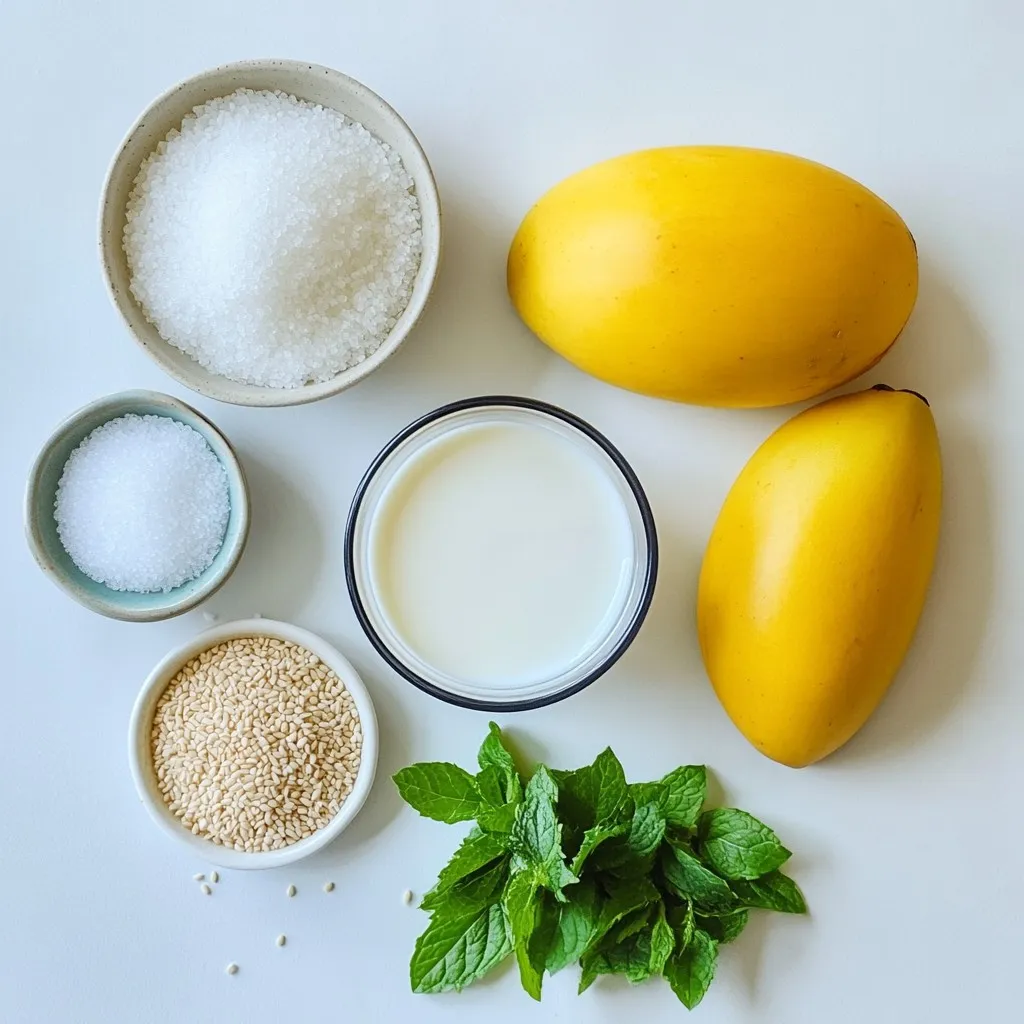
For this tasty dessert, you will need a few key ingredients. Here’s what you’ll need:
– 1 cup glutinous rice (sticky rice)
– 1 ½ cups coconut milk
– ½ cup granulated sugar
– ¼ teaspoon salt
– 2 ripe mangoes, peeled and cut into thin slices
– 1 tablespoon sesame seeds (for garnish)
– Fresh mint leaves (for garnish)
Glutinous Rice: The Foundation of the Dish
Glutinous rice is the star of this dish. It is not regular rice. It has a high starch content. This makes it sticky when cooked. You must rinse it well before soaking. Rinsing removes excess starch. Soaking it for 4 hours or overnight helps it cook perfectly. This rice will give you that chewy texture everyone loves.
Coconut Milk: Creaminess and Flavor
Coconut milk adds rich creaminess to the dish. It gives a sweet flavor that pairs well with mango. The sugar and salt balance the taste. When you heat the coconut milk, it melts the sugar. This creates a smooth sauce. Pour it over the sticky rice, and it makes every bite delicious.
Step-by-Step Instructions
Preparing the Glutinous Rice
Start by rinsing 1 cup of glutinous rice. Use cold water until it runs clear. This step removes excess starch. After rinsing, soak the rice in water for 4 hours, or overnight. Soaking helps the rice become soft and sticky.
Steaming the Rice for Perfect Texture
Once soaked, drain the rice well. Set up your bamboo or metal steamer. Line it with cheesecloth to prevent the rice from falling through. Place the rice in the steamer and cover. Steam it for 20-25 minutes. The rice should feel tender and sticky when done.
Making the Coconut Milk Sauce
While the rice steams, make the coconut milk sauce. In a small saucepan, mix 1 ½ cups of coconut milk, ½ cup of sugar, and ¼ teaspoon of salt. Heat this over medium heat. Stir gently until the sugar dissolves. Do not let it boil.
After the rice is cooked, transfer it to a mixing bowl. Pour in about 1 cup of the warm coconut milk mixture. Stir gently to coat the rice evenly. Cover the bowl and let it rest for 20 minutes. This allows the rice to absorb the coconut flavor fully.
Tips & Tricks
Achieving the Perfect Sticky Rice
To get the best sticky rice, rinse it well. Rinse until the water is clear. This step removes excess starch. Soaking the rice is key. I recommend soaking it for at least 4 hours. For the best texture, soak it overnight. Steaming is the next step. Use a bamboo or metal steamer. Line it with cheesecloth to prevent sticking. Steam the rice for 20-25 minutes. Check if it’s tender and sticky. This will give you that perfect chewy bite.
Common Mistakes to Avoid
Avoid using regular rice; it will not work. Glutinous rice is a must for this dish. Another mistake is not soaking the rice long enough. If you skip soaking, the rice won’t be sticky. Don’t skip the coconut sauce either. It adds creaminess and flavor. Heat it gently, and don’t let it boil. If you do, the sauce may curdle. Lastly, don’t rush the resting time. Let the rice absorb the coconut milk fully.
Enhancing Flavor with Additional Ingredients
To boost flavor, consider adding a pinch of pandan leaf while steaming. Pandan adds a lovely aroma. You can also mix in a bit of vanilla extract to the coconut sauce. This adds depth to the sweetness. For a crunchy texture, try toasted coconut flakes. They add a nice bite. Fresh lime zest can also brighten the flavors. Just a sprinkle enhances the dish beautifully.
Pro Tips
- Soaking Time Matters: Soaking the rice for at least 4 hours or overnight ensures a perfect sticky texture, making it easier to steam and absorb flavors.
- Coconut Sauce Consistency: Ensure the coconut milk mixture is warm when adding to the rice; this helps it absorb better and enhances the overall flavor.
- Steaming Technique: Cover the steamer with a lid to trap steam effectively, which is crucial for cooking the rice evenly and achieving the desired sticky consistency.
- Serving Suggestions: For added flavor, consider serving with a sprinkle of toasted coconut flakes or a drizzle of honey for an extra touch of sweetness.
Variations
Different Mango Varieties to Use
You can use many types of mangoes for this dish. Each variety adds its own unique flavor. I suggest using ripe and sweet mangoes. Some good options are:
– Honey Mango: This type is very sweet and juicy.
– Haden Mango: It has a rich flavor and nice aroma.
– Tommy Atkins: This mango is easy to find and has a firm texture.
Try different mangoes to see which one you like best. Each type will change the taste of your dessert.
Substituting Coconut Milk for Dairy-Free Options
If you want a dairy-free option, coconut milk is perfect. You can also use other plant-based milks. Consider these options:
– Almond Milk: It has a light flavor, but it may not be as creamy.
– Cashew Milk: This milk is rich and creamy, great for dessert.
– Soy Milk: This one has a good texture and works well in many recipes.
Just keep in mind that these milks may alter the dish’s taste and creaminess. Adjust the sugar if needed.
Additional Toppings and Garnishes
Adding toppings can make your mango sticky rice even more fun. Here are some ideas to try:
– Sesame Seeds: A sprinkle adds crunch and flavor.
– Chopped Nuts: Peanuts or cashews give a nice texture.
– Coconut Flakes: Toasted coconut adds a sweet crunch.
– Fresh Fruits: Add berries or bananas for extra color and taste.
Feel free to get creative! These toppings can change how your dish looks and tastes.
Storage Info
How to Store Leftover Sticky Rice
To store leftover sticky rice, let it cool to room temperature. Place it in an airtight container. You can keep it in the fridge for up to three days. If you want to store it longer, freeze it in small portions. Make sure to wrap it tightly in plastic wrap before placing it in a freezer bag.
Reheating Tips for the Best Texture
When reheating sticky rice, use a steamer for the best results. Place the rice in the steamer basket and cover it with a damp cloth. Steam for about 5 to 10 minutes until warm. You can also add a splash of water to help keep it moist. If you use a microwave, cover the rice with a damp paper towel. Heat it in short bursts to avoid drying it out.
Shelf Life of Prepared Dish
The shelf life of prepared Thai mango sticky rice is about three days in the fridge. After that, the rice may lose its texture and flavor. If stored properly in the freezer, it can last for up to a month. Just remember to thaw it in the fridge before reheating. Enjoy your delicious dessert while it’s fresh for the best taste!
FAQs
What is the best type of rice for Mango Sticky Rice?
The best rice for Mango Sticky Rice is glutinous rice. This rice is also called sticky rice or sweet rice. It has a high starch content that makes it sticky when cooked. This stickiness helps the rice hold together, creating a perfect base for the dish. You can find glutinous rice in Asian grocery stores. Look for it in the rice section.
Can I make Thai Mango Sticky Rice in advance?
Yes, you can make Thai Mango Sticky Rice in advance. However, I recommend storing the rice and coconut sauce separately. This way, the rice stays fresh and doesn’t get too soggy. You can prepare the rice and the sauce a day ahead. Just reheat the rice gently before serving. Add the sauce and mango slices right before you enjoy it for the best taste.
What can I serve with Thai Mango Sticky Rice?
Thai Mango Sticky Rice is great on its own, but you can serve it with other treats. Here are some ideas:
– Fresh tropical fruits like pineapple or dragon fruit
– Crispy spring rolls for a crunchy contrast
– A scoop of coconut ice cream for extra creaminess
– Sweetened black sesame soup for a unique twist
These pairings bring out the flavors of the sticky rice and make your meal more fun!
In this blog post, we explored the important ingredients that make Thai mango sticky rice special, focusing on glutinous rice and creamy coconut milk. I guided you through each step to prepare and steam the rice and create the delicious coconut sauce. Remember the tips to achieve the gooey texture and avoid common mistakes. You can also try various mango types and toppings to make it your own. Enjoy making this treat, and don’t forget about proper storage for leftovers. Perfecting this dish is worth it for everyone who loves Thai dessert